location: VIRTUAL | Date: 11-14-2025
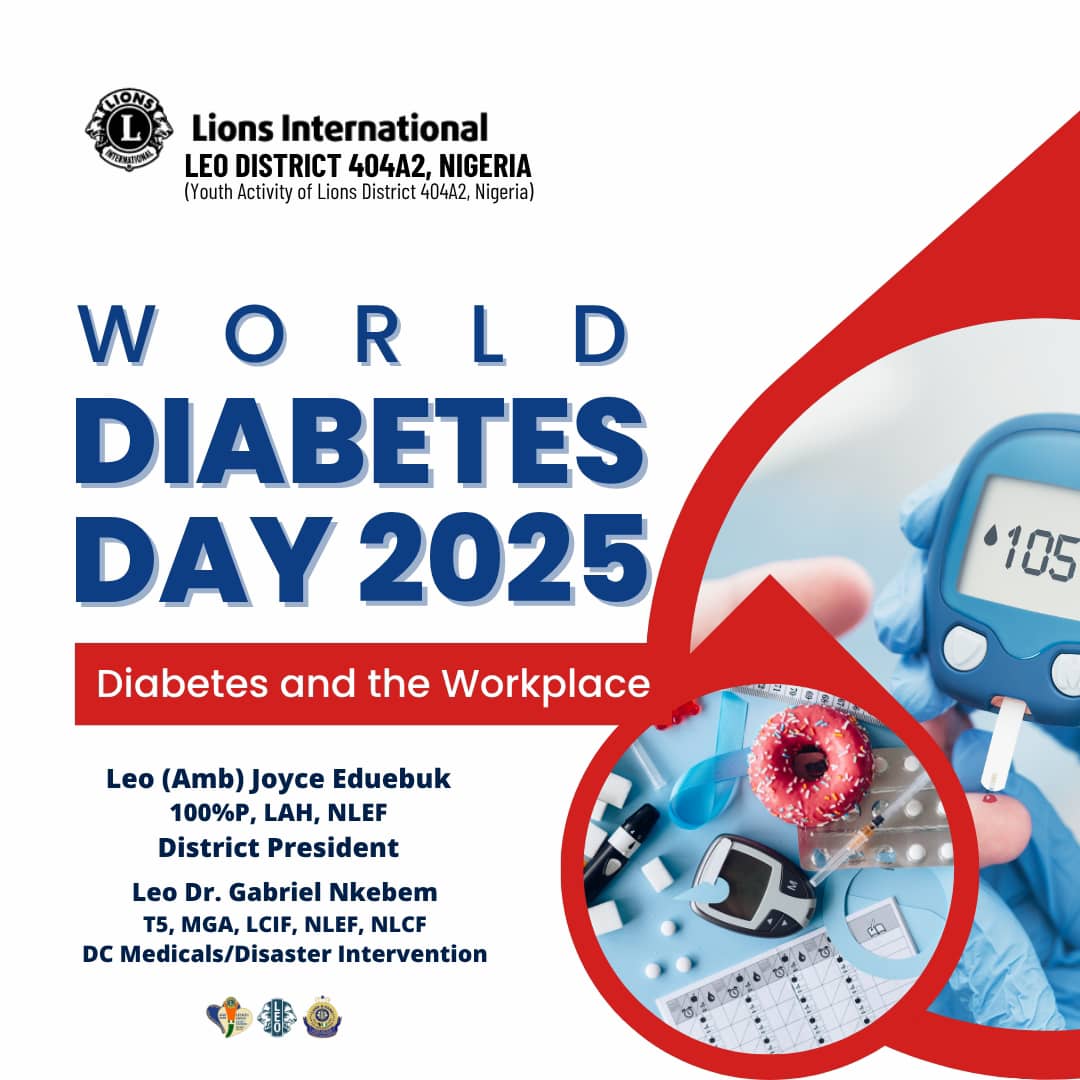
Diabetes is a chronic metabolic disorder characterized by elevated blood glucose levels due to insufficient insulin production (Type 1), impaired insulin function (Type 2), or both, affecting over 460 million people worldwide.
Type 1 diabetes, often diagnosed in childhood, results from autoimmune destruction of pancreatic beta cells, requiring lifelong insulin therapy, while Type 2, linked to obesity, sedentary lifestyle, and genetics, accounts for 90-95% of cases and is managed through diet, exercise, oral medications, or insulin.
Complications include cardiovascular disease, kidney failure, neuropathy, and retinopathy, but early detection via fasting blood sugar or HbA1c tests, along with lifestyle modifications and medications like metformin or GLP-1 agonists, can significantly reduce risks and improve quality of life.
 Leo
District 404A2, Nigeria
Leo
District 404A2, NigeriaLions Park, Marian Road, Calabar
+2348032506547 | +2348138496802
Enter your email to receive notification on our monthly Newsletter here
 Diabetes
 Vision
 Hunger
 Environmment
 Disaster Relief
 Humanitarian
 Youth
Youth